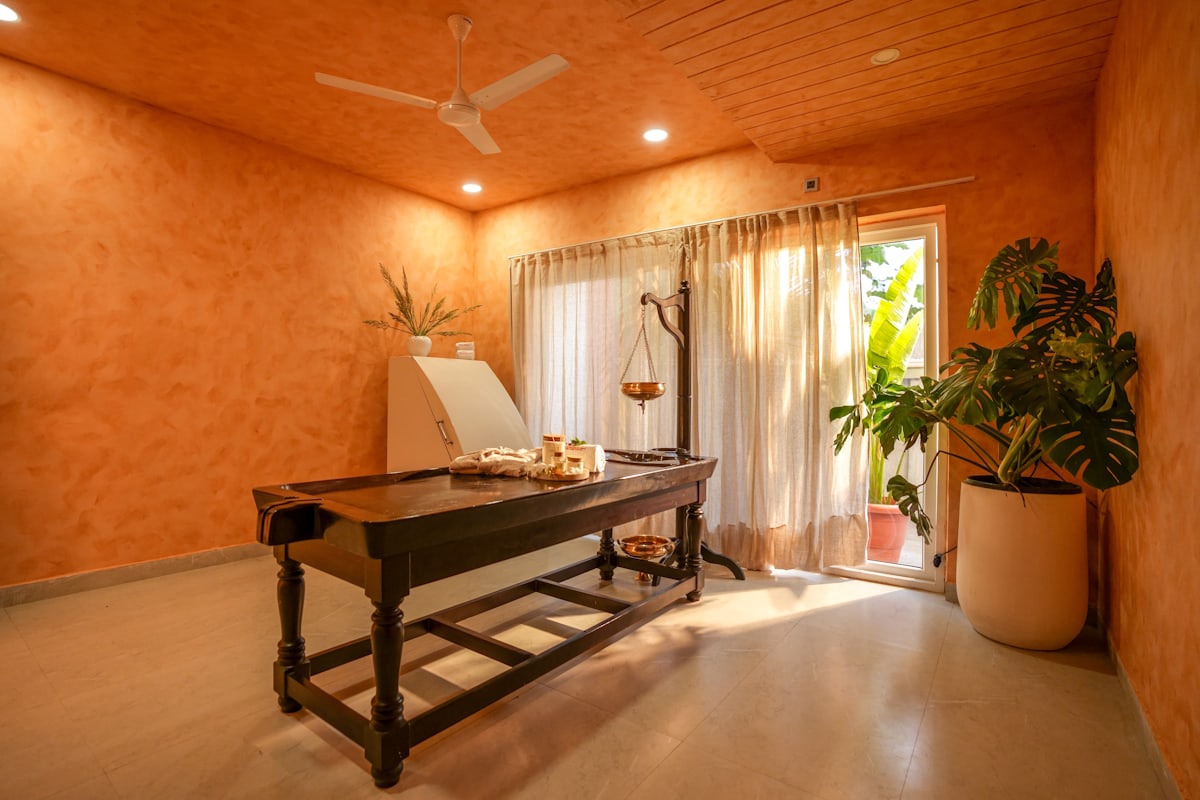
The technique doesn’t change much between mobile and in-studio massage. What changes is everything around it: the room, the equipment, the pricing, and honestly, how much effort you have to put in before the therapist even arrives. Neither format is the “real” version of massage. They’re built for different situations.
In-studio: the controlled environment
A studio session happens on the therapist’s terms, in a space set up specifically for bodywork. That usually means a proper hydraulic or electric table, adjustable lighting, a sound system, and sometimes equipment that’s genuinely hard to bring on the road, like hot stone warmers or specialized bolsters for prenatal clients.
There’s also a psychological shift that happens when you leave your own space. Home carries its own noise: a phone that keeps buzzing, a dog scratching at the door, a mental list of chores visible from the table. A studio removes all of that by design. For clients who struggle to actually relax at home, that separation alone can be worth the drive.
The tradeoff is time and logistics. You have to get there, find parking, and get back afterward, which adds thirty minutes to an hour on either side of the actual session depending on where you live.
Mobile: convenience without the commute
Mobile massage flips the setup. The therapist brings a portable table, sheets, and oils to you, whether that’s your home, a hotel room, or an office. No driving, no waiting room, no post-massage drive home while your muscles are still loose and you’re fighting to stay alert behind the wheel.
This matters more than it sounds. Getting up from a table, getting dressed, and driving immediately after deep tissue work undoes some of the relaxation almost instantly. Mobile sessions let you go straight from the table to your own couch, which is a meaningfully different experience, not just a convenience upgrade.
It’s also the more practical option for people managing mobility limits, recovering from surgery, caring for a child at home, or simply not wanting five people to see them walk out of a massage studio looking half-asleep. None of those are small concerns, even if they rarely come up in how massage gets marketed.
The catch is space. You need a room that’s reasonably quiet and large enough for a table, plus enough privacy that you’re comfortable undressing there. Apartments with thin walls or a house full of family members can make this harder than it sounds on paper.
Equipment gaps worth knowing about
Not every mobile therapist travels with the full range of studio equipment. Hot stone treatments require a warmer that’s heavy and impractical to transport for a single session, so some therapists only offer that technique in-studio. The same goes for specialized prenatal tables with cutouts, or anything requiring a fixed power source for extended heating.
If a specific technique matters to you, don’t assume it’s available in both formats. Check the profile, or just ask directly. Most therapists list which services are available where, and the ones who don’t are usually happy to clarify in a quick message.
Which one actually fits your week?
Pick in-studio if you want the full setup, you’re dealing with a technique that needs fixed equipment, or you genuinely want to leave your house and separate the massage from your usual environment. Pick mobile if you’re short on time, dealing with mobility issues, traveling, or you simply don’t want the drive home undoing the relaxation you just paid for.
Cost is rarely the deciding factor, since pricing between the two formats is often close. The real question is what your day actually looks like, and which format removes more friction rather than adding it.
Ready to book? Search mobile therapists in your city or browse the full directory to compare in-studio options nearby. Still deciding on credentials or technique? Read How to Choose a Massage Therapist for the rest of the checklist.